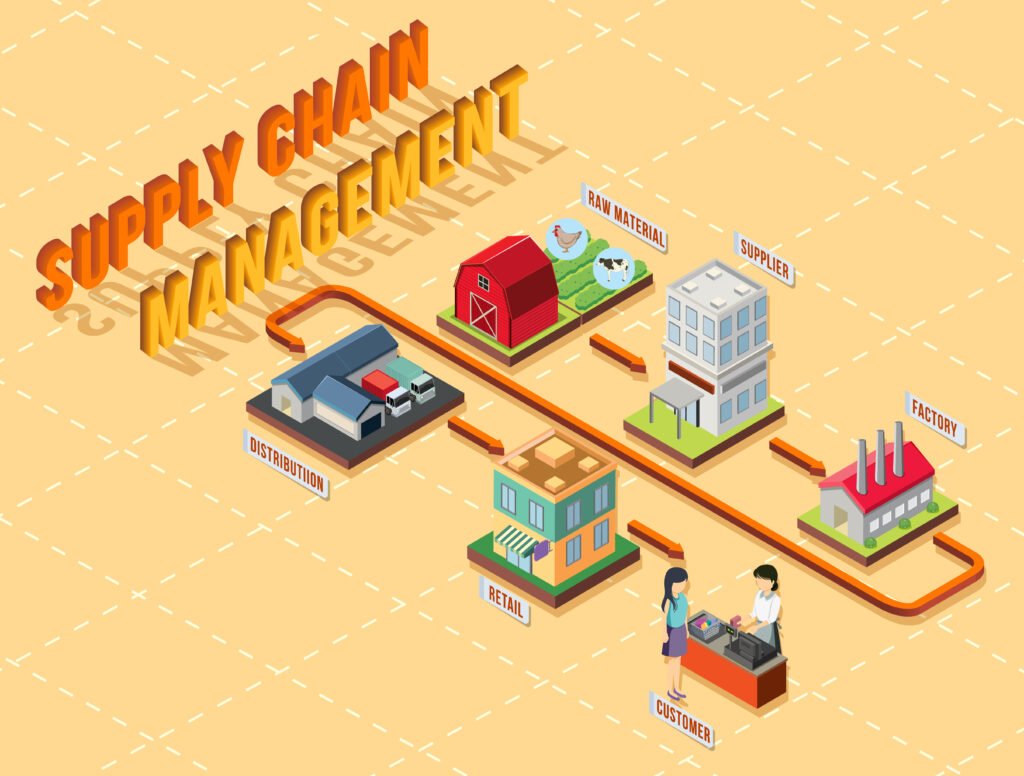
A supply chain acts from the sourcing of raw materials and components, through manufacturing, assembly, distributors, and retailers to customer satisfaction. Actually, it is a network of individuals and organizations, resources, activities, and technology involved in the creation and delivery of a product or service to the end consumer.
Key aspects of a supply chain:
Sourcing and Production:
This involves obtaining raw materials, transforming them into intermediate parts, and then assembling them into a finished product.
Logistics and Distribution:
This includes inbound and outbound logistics, covering transportation, warehousing, and delivery of goods to customers.
Management and Coordination:
Supply chain management focuses on efficiently coordinating these various activities and flows of goods, information, and funds to optimize the entire process. Eventually, it focuses on end customers’ satisfaction.
End-to-End Process:
The supply chain extends from the very beginning of the value chain, with raw material extraction, to the final delivery to the end user and even post-sale services.
Distribution:
Moving products from the manufacturer to retailers or directly to consumers.
Order Fulfillment:
Managing the process of receiving, processing, and shipping orders.
Customer Service:
Providing support and handling returns.
A supply chain also includes the processes of sourcing materials, manufacturing, distribution, and even returns. Supply chain management (SCM) focuses on optimizing this entire process to improve efficiency, reduce costs, and enhance customer satisfaction.
Supply Chain Management (SCM):
SCM is a broader concept that involves coordinating and managing all these activities to improve overall efficiency and effectiveness. In fact, it aims to:
Reduce Costs:
By optimizing processes and finding efficiencies, SCM can help lower production and distribution expenses.
Improve Efficiency:
Streamlining the flow of goods and information can lead to faster turnaround times and reduced waste.
Enhance Customer Satisfaction:
By ensuring timely delivery and responsive customer service, SCM can improve the overall customer experience.
Increase Revenue:
Efficient supply chains can help companies respond quickly to market demands and potentially increase sales.
Reduce Risk:
Effective SCM can help identify and mitigate potential disruptions in the supply chain, such as delays or shortages.
In essence, a well-managed supply chain is crucial for businesses to remain competitive and meet the demands of today’s market.